Ambedkar on Partition and Islam: Unpacking Thoughts on Pakistan
The partition of India in 1947 was not only a political event or bifurcation of a nation into two parts. But it was one of the most traumatic and horrific transfer of people in the history. It is considered to be one of the most traumatic movement in the history of South Asia. The partition of India did not happen in a single day. We cannot say that at this point, the partition paved its roots in the Indian society. But the changing social and political realm of the Indian society made it happen and the rest is history.
Context of the Demand
The issue of the partition was not only occurred but also tried to be resolved. But it couldn’t happen. It was shaped by the debates and discussions of the leaders who shape the political realm of India in British period. These leaders include:- Mohandas Gandhi, Jawaharlal Nehru, Muhammad Ali Jinnah and Dr. Ambedkar.
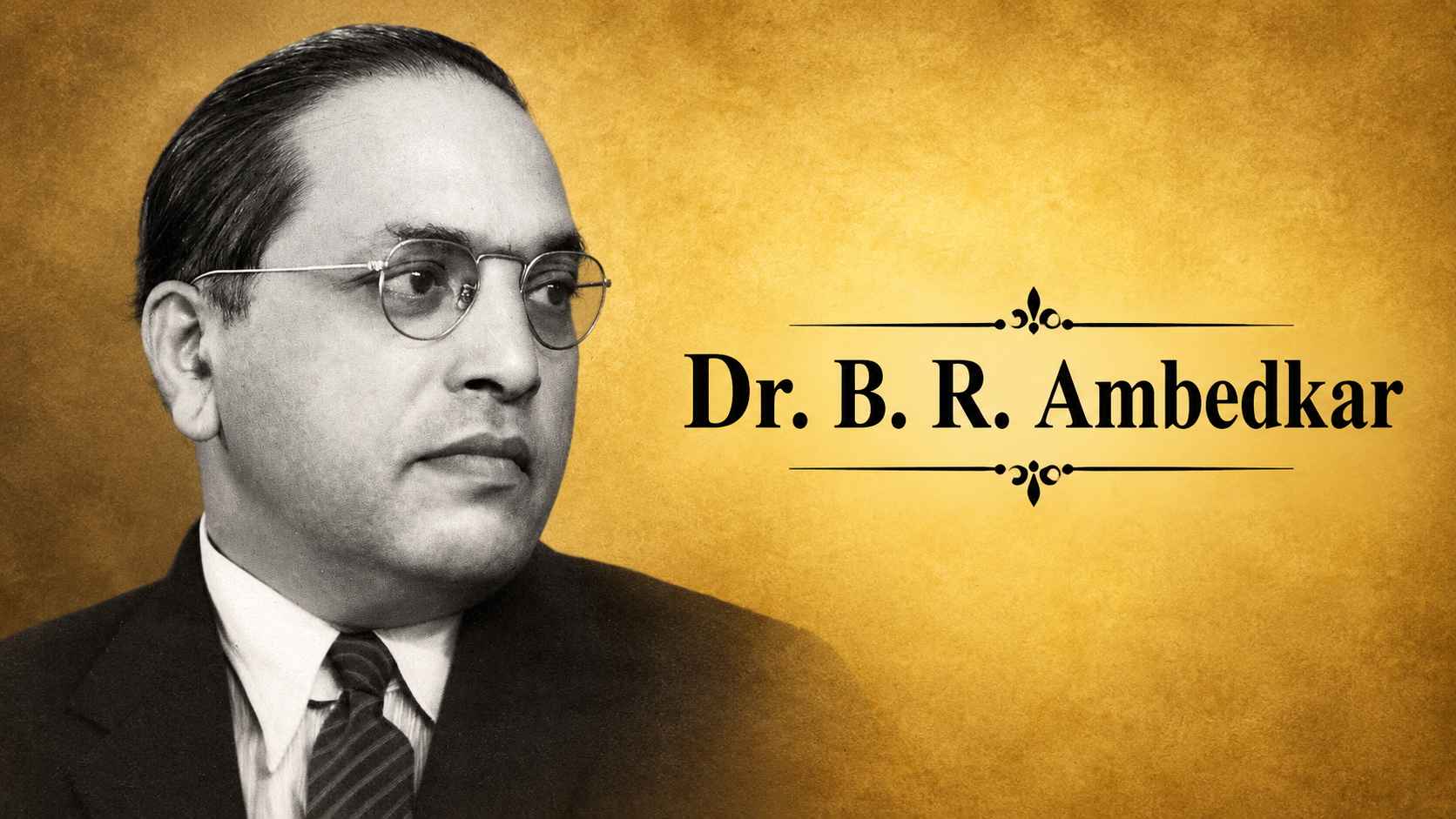
Dr. Ambedkar is widely known as the chairman of the drafting committee of our constitution and a crusader against the social inequalities in the society. But he offers a unique perspective on the communal conflicts during that period and also the demand of Muslim League for a separate nation called ‘Pakistan’. In his book, ‘Thoughts on Pakistan’, he has provided a detailed analysis on how the communal harmony was narrowed and also showed a realistic way of looking on the principal reason/cause for the partition of India.
Islam and National Identity
Dr. Ambedkar approached the issue with realism and intellectual honesty. He refused to focus on communal disturbances as the main cause of partition of India as it was believed by Muslim League. Instead, he gave a detailed analysis on social, political, sociological and cultural aspects as the reason for partition of the nation. His arguments also gave his critical assessment over the role of Islam in India and how it shaped the contemporary political scenario of the nation.
Here we can see a detailed analysis on Ambedkar’s writings on Islam and partition especially his book Thoughts on Pakistan. Here we can also see his context, his demand for separation and detailed discussion over the partition of India.
By the late 1930s, the communal question had come to dominate Indian politics. The Government of India Act of 1935 had introduced provincial autonomy, and elections under this framework in 1937 had seen the Congress emerge as the dominant political force in many provinces.
In 1940, at its Lahore session, the Muslim League formally passed the resolution demanding Pakistan—a separate homeland for Muslims in the north-western and eastern parts of India. The Congress, committed to the ideal of a united India, dismissed the demand as divisive and untenable.
In 1941, Dr. Ambedkar published ‘Thoughts on Pakistan ‘. But let it be very clear that he was writing the text neither as the member of Indian National Congress nor as the supporter of Muslim League.
As the leader of the Depressed Classes (Dalit), he had his own vantage point. His concern was twofold:- first, to analyse whether Muslims’ demand for separation had historical and sociological grounding; and second, to evaluate what arrangement would be most conducive to long-term stability and justice in the subcontinent.
Ambedkar’s Characterisation of Islam in India:-
- Islam as the close compartment:-
One of Ambedkar’s central arguments in Thoughts on Pakistan was that Islam, unlike some other religions, encouraged strong social exclusivity. He described Islam in India as a “close corporation,” meaning that it functioned as a self-contained community with its own laws, customs, and political loyalties.
For Ambedkar, the Islamic concept of umma—the universal brotherhood of believers—meant that Muslims were less inclined to merge their identity into a territorial nationalism based on India alone. Their loyalty, he argued, extended beyond the Indian nation to a transnational religious community.
- Resistance to assimilation:-
Ambedkar argued that the condition of Islam in India is different as compared to Christianity in Europe. While Christianity had historically adapted itself to various national cultures, Islam in India retained a distinct civilizational identity that resisted assimilation.
In his views, this was the main reason why the Hindu-Muslim unity remained fragile even after the centuries of co-existing. In Indian society, the Hindu caste at least share certain a sense of belonging for a common civilization. They all believe that they all are the different branches of the same tree. But that was not in the case of Muslims in India.
Muslims saw themselves as part of a different historical and religious trajectory. They did not believe themselves as the part of civilization of India. They always seen themselves as religious minorities. Ambedkar also pointed out that the Muslim community also hindered the growth of a composite national identity.
Validating Minority Fears
- Recognition of Muslim fears:-
Ambedkar took a different stand that of the Indian National Congress. When most Congress leaders were busy in acknowledging the legitimacy of Muslim fear, Ambedkar on the other hand, recognized that in a democratic India with universal franchise, Hindus would inevitably constitute the majority, and Muslims feared marginalization.
Dismissing these fears as groundless, he argued, was unwise and unfair. Muslims were not merely bargaining for privileges; they genuinely sought to avoid domination in a Hindu-majority polity.
- Partition as a serious proposition:-
At that point of time, the Indian National Congress dismissed the idea of partition as an unthinkable option. On the contrary, Ambedkar treated it as a serious political proposition that deserved detailed analysis. He argued that the question is not about whether Hindus want unity but are Muslims are willing to live in the united framework. If Muslims themselves rejected unity, then insisting on it would only breed perpetual conflict. He believed that if Muslims did not want to live in an United framework, then there is no benefit in constantly forcing that one particular religious community.
- Options before India:-
In his book ‘Thoughts on Pakistan’, Ambedkar pointed out three possible options which was opened for India during that period. Let’s discuss these three possible options:-
- Reject partition outright:- The first and foremost option which was opened before the India was that it should clearly reject the every possible opportunity of partition and coerce the entire Muslim population to remain in the Indian union.
- Accept partition:- The second option was that the Indian union should accept the idea of partition and allow Muslims to form Pakistan while negotiating terms to safeguard interests of both sides.
- Offer safeguards within a united India:- The third and the last option opened for India was that it should provide safeguards such as federalism, minority rights, and reserved representation. But the only problem was that he doubted whether both the communities would agree to this particular solution.
In weighing these options, Ambedkar leaned towards conditional acceptance of partition, not because he considered it ideal but because he saw it as the lesser evil compared to enforced unity.
Three Paths Forward
- Compulsory exchange of populations:-
Dr. Ambedkar’s most controversial proposal was the complete transfer of population between Hindi-majority and Muslim-majority areas. He believed that without such a transfer, minorities in both India and Pakistan would remain vulnerable and communal conflict would continue indefinitely. His vision anticipated when the world witnessed one of the most tragic and horrifying migration in 1947, when millions of people were displaced in violence. Countless people were ruthlessly killed, maimed and women were raped.
- Settlement of defense and resources:-
According to Ambedkar, partition was not only a territorial division among the masses. But also it was a severe issue related to defense, foreign policy and resources distribution would require careful settlement. He doubted Pakistan’s economic viability, given the uneven distribution of resources between the proposed regions. Yet he argued that if Muslims insisted, they should be allowed to “make their experiment”.
- Partition as pragmatic, not desirable:-
Ambedkar did not celebrate partition. He repeatedly emphasized that he did not desire the division of India. His approach was pragmatic in nature:- Muslims were determined, then denying them Pakistan would only lead to bitterness and violence. He suggested to have a negotiated separation with clear terms than a forced and unstable unity.
Foresight and Limits
- Realism:- Dr. Ambedkar’s greatest strength lay in his refusal to indulge in sentimental illusions. Where Gandhi invoked spiritual unity and Nehru stressed secular nationalism. On the other hand, Ambedkar insisted on confronting the hard sociological and political realities of communal division.
- Recognition of minority fears:- Ambedkar emphasized in acknowledging the Muslim anxieties. At a time when many Hindu leaders dismissed the demand for Pakistan as a conspiracy, Ambedkar treated it as an expression of genuine insecurity.
- Forward-looking analysis:- His proposals for population exchange and clear demarcation of powers anticipated the actual problems that emerged in 1947. He foresaw that unresolved minority questions would lead to violence, which tragically proved correct. He was a farsighted person who thought what could be the consequences and these consequences proved right when the world witnessed the horrific tragedy of partition.
- Minority-rights perspective:- Being a leader of Depressed classes sensitized him to the dangers of majoritarian domination. His analysis of Muslims’ fears was consistent with his lifelong concern for protecting vulnerable groups through institutional safeguards.
When partition finally occurred in 1947, it bore some resemblance to Ambedkar’s analysis but also revealed its limitations. His fears of communal violence and the need for population transfers proved tragically accurate, though the transfers occurred chaotically rather than in an organized fashion.
His insistence that unity without consent would lead to perpetual conflict was confirmed by the eventual collapse of all attempts at Congress–League cooperation. His hopes for a clean and amicable separation were belied by the bloodshed of partition. Moreover, his essentialist view of Islam overlooked the fact that many Muslims chose to remain in India and became part of its democratic fabric.
Ambedkar’s Thoughts on Pakistan remains one of the most sober and intellectually rigorous analyses of the communal question in late colonial India. Unlike the emotional appeals of Congress or the absolutist demands of the Muslim League, Ambedkar approached the issue with dispassionate realism. He recognized the genuine fears of Muslims, acknowledged the difficulties of Hindu–Muslim coexistence, and considered partition as a possible, if regrettable, solution.
At the same time, his analysis was marked by essentialist assumptions about Islam, ambivalence in prescribing solutions, and insufficient engagement with possibilities of federal accommodation. His proposals, particularly compulsory population exchange, reveal both his foresight and his limitations.
Ultimately, Ambedkar’s importance lies not in offering a definitive blueprint but in insisting on confronting political realities without illusion. His reflections remind us that nation-building requires not just appeals to unity but careful attention to institutional arrangements, minority rights, and the hard truths of social division.
In the history of ideas around partition, Ambedkar’s voice stands out for its clarity, candor, and concern for justice. While the actual events of 1947 unfolded with more violence and chaos than he had hoped, his analysis remains a significant contribution to understanding the complexities of Hindu–Muslim relations and the tragic inevitability of partition.
Ambedkar’s views and writings remained as the most important literary work for the partition and Islam in India. His ideas and vision includes realism, focus on pragmatism and not only provided the insights but also provided solutions regarding the partition.
(Author is a student of Political Science at Sri Aurobindo College, DU at New Delhi)
(The ideas & opinions expressed are personal to the author & do not represent The Heritage Times)